

Procedural 3D solutions
Rules instead of manual work: we build tools that generate 3D content to your specification — as often as you like, at consistent quality.
Overview
Build the rule once, produce the result as often as you like.
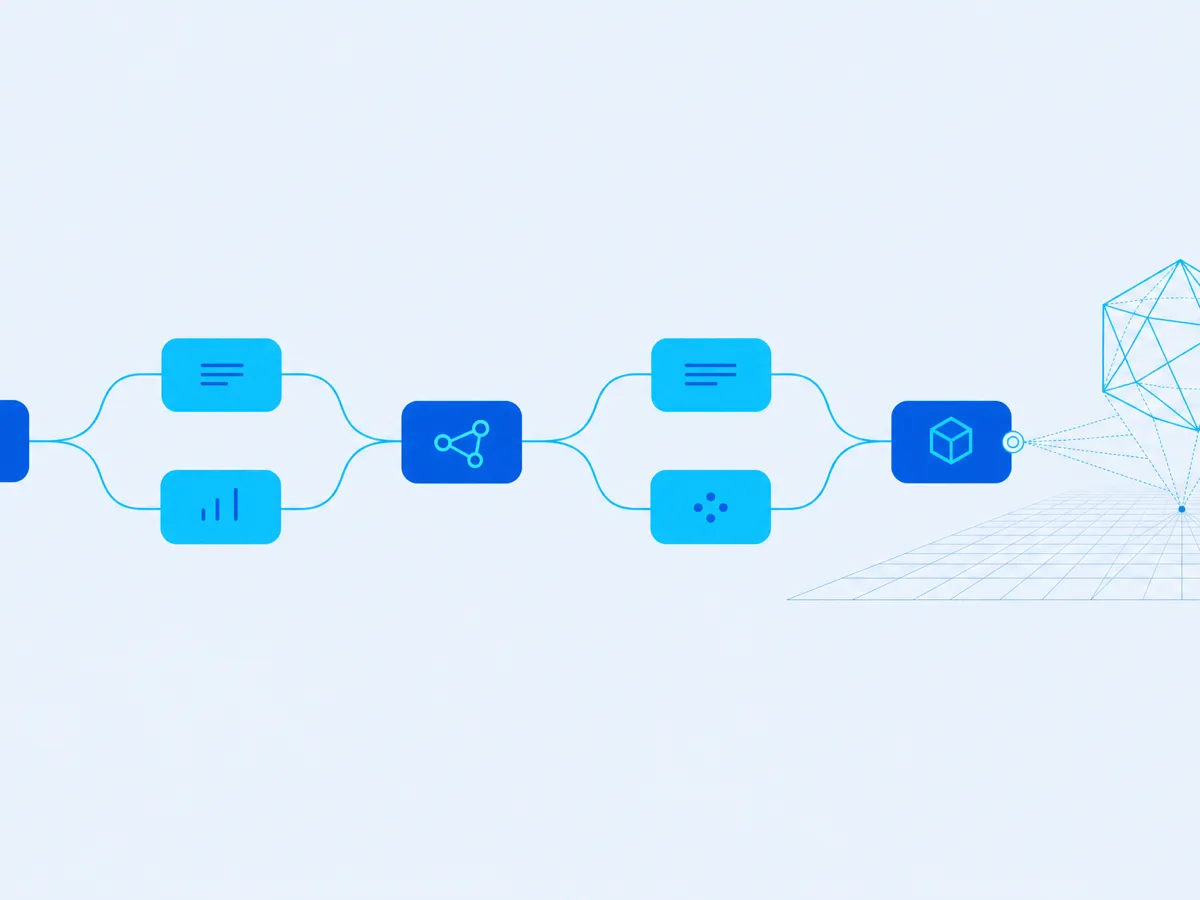
Procedural work describes an object not as finished geometry but as a sequence of rules. Change a parameter — length, count, material, equipment — and the rule chain runs again and delivers a new, internally consistent result. Nothing has to be corrected by hand.
For product families with many versions, for environments and for recurring preparation steps, that is the difference between weeks of modelling and a tool your own team operates.
Principles
Why procedural.
Three properties that set it apart from classic modelling.
Non- destructive
Every step stays editable. A correction at the start of the chain carries through to the finished asset.
Unlimited variants
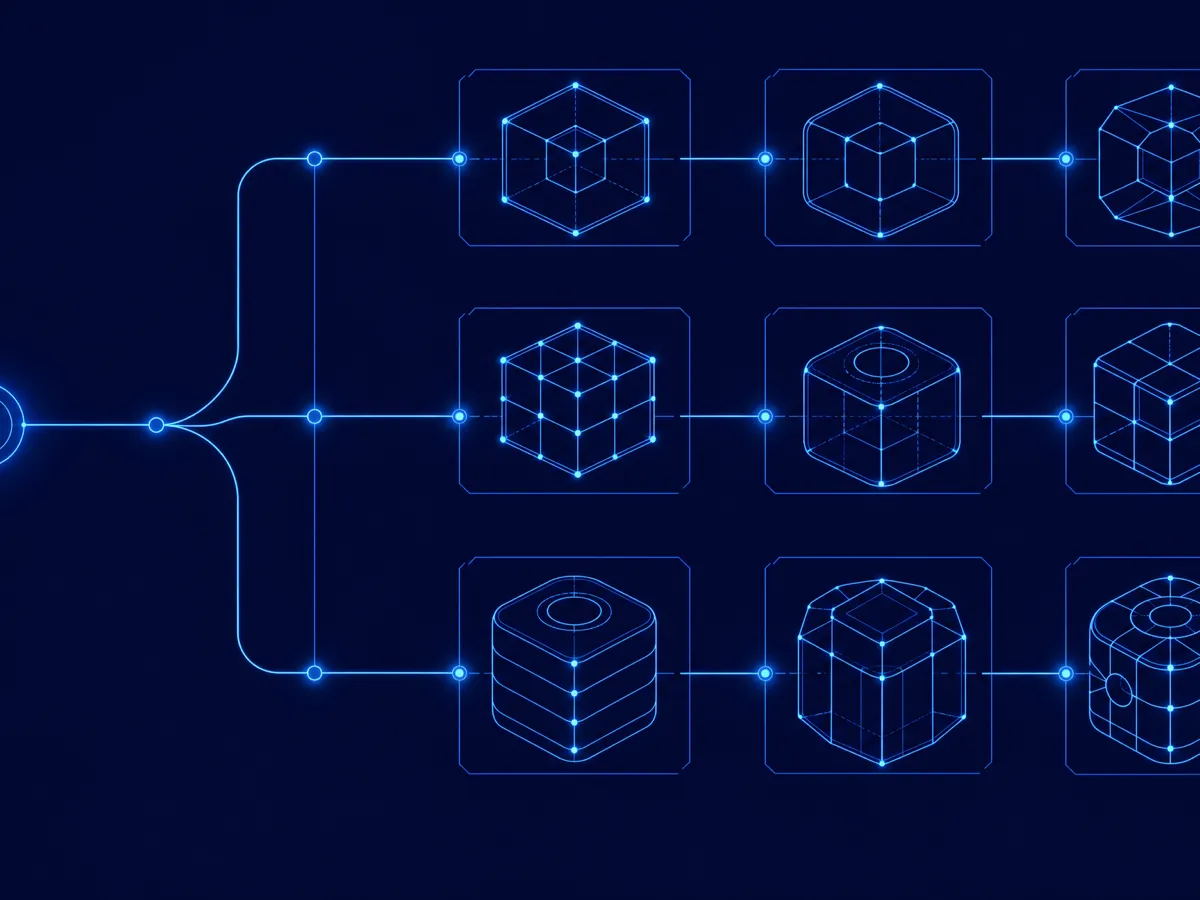
One parameter set produces one version. A hundred parameter sets produce a hundred versions.
Consistent quality
Rules do not make careless mistakes. Every result follows exactly the same specification.
Tooling
What we build.
From the encapsulated rule chain to unattended processing of entire catalogues.
HDA
Bespoke digital assets
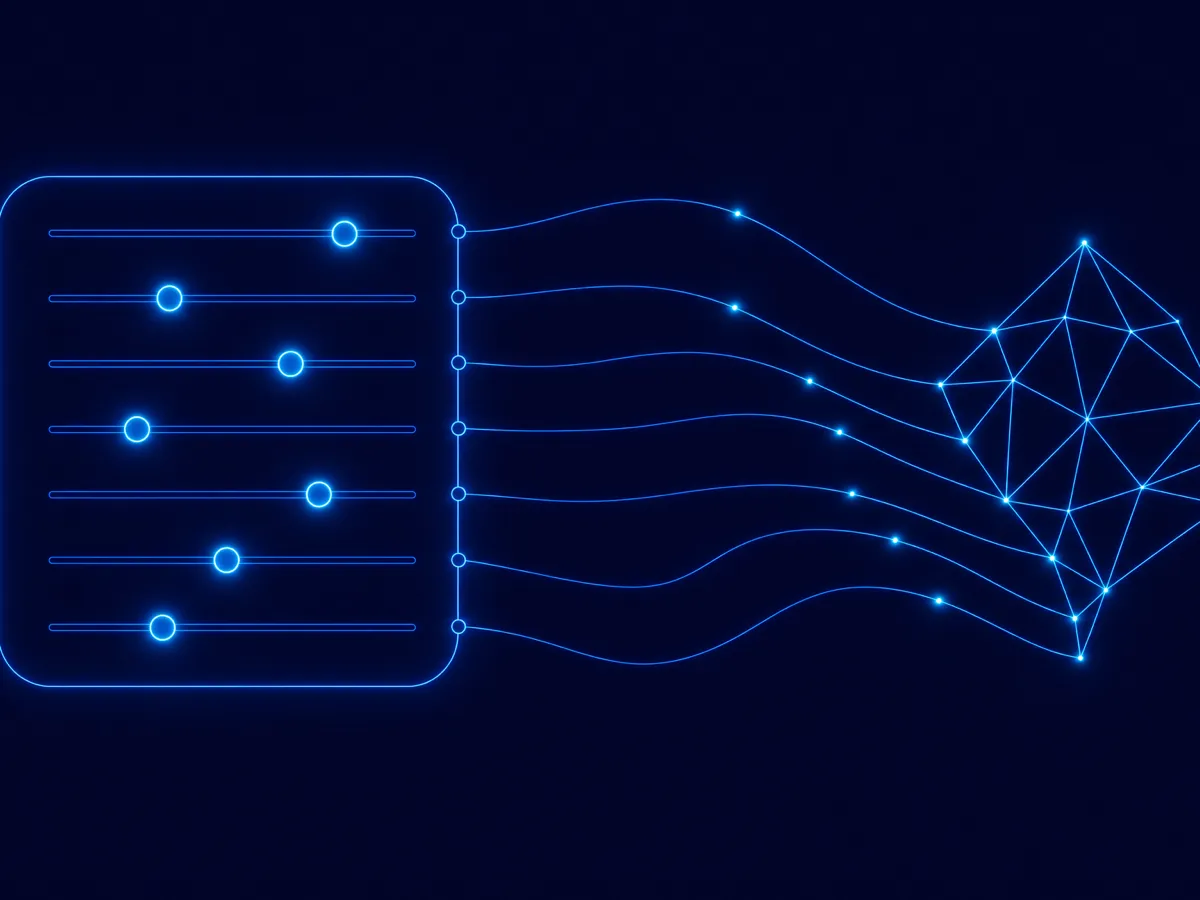
We wrap the rule chain in a Houdini Digital Asset with a tidy parameter interface. Your team sets values and gets a result — without having to know the node graph underneath.
BATCH
Automated runs
Driven from the command line or a job system, whole variant and catalogue runs execute unattended — overnight, spread across machines or in the cloud.
PIPELINE
Connected to your environment
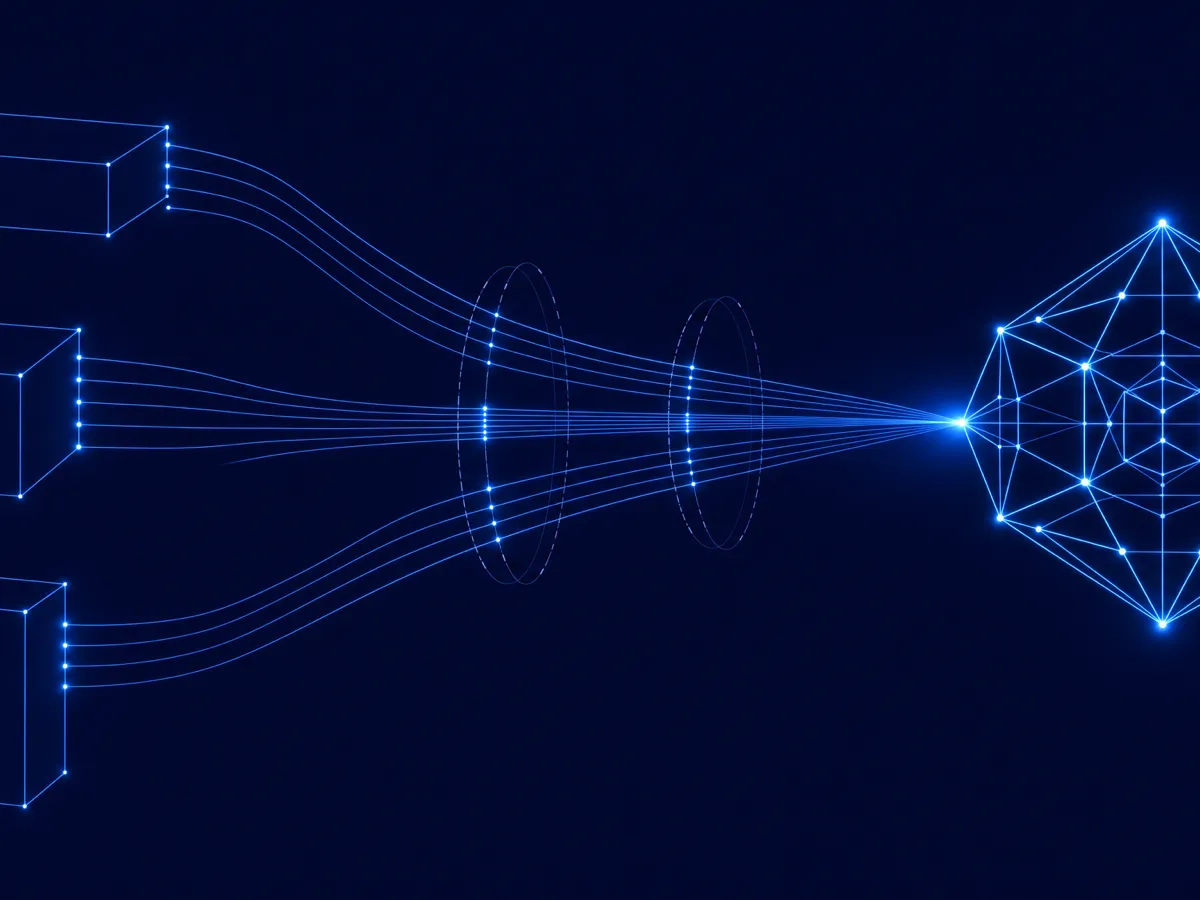
The tools read from your source systems and write the formats your real-time applications and renderings expect — as a fixed part of the chain, not an island.
Fields of use
Where procedural tooling pays off.
Wherever the same work keeps coming back in slightly modified form.
Product families and kits
One generator produces every version of your range — from shortest to longest, with all attachments.
Environments and context
Halls, installation situations and outdoor areas are generated by rule as a setting for your product.
Recurring preparation
The same post-processing steps on engineering data run as a tool instead of as manual work.
How it runs
From manual step to tool.
We do not automate on spec, but along the steps that genuinely repeat in your work.
Analysing the steps
We look at which manual steps repeat and which rules actually sit behind them.
Prototype rule chain
A first pass on real data shows whether the automation holds up.
Tool and interface
The rule chain becomes an operable asset with clear parameters and sensible limits.
Handover and onboarding
Integration into your environment, documentation and onboarding for your team.
Which manual step keeps repeating for you?
Describe your workflow — we will check what is genuinely worth automating.
Discuss a project